
PMH LEARN network overview
A downloadable two-page overview of the Network, its purpose, hubs and approach.
A one-page visual explainer using the PMH LEARN learning-cycle graphic.

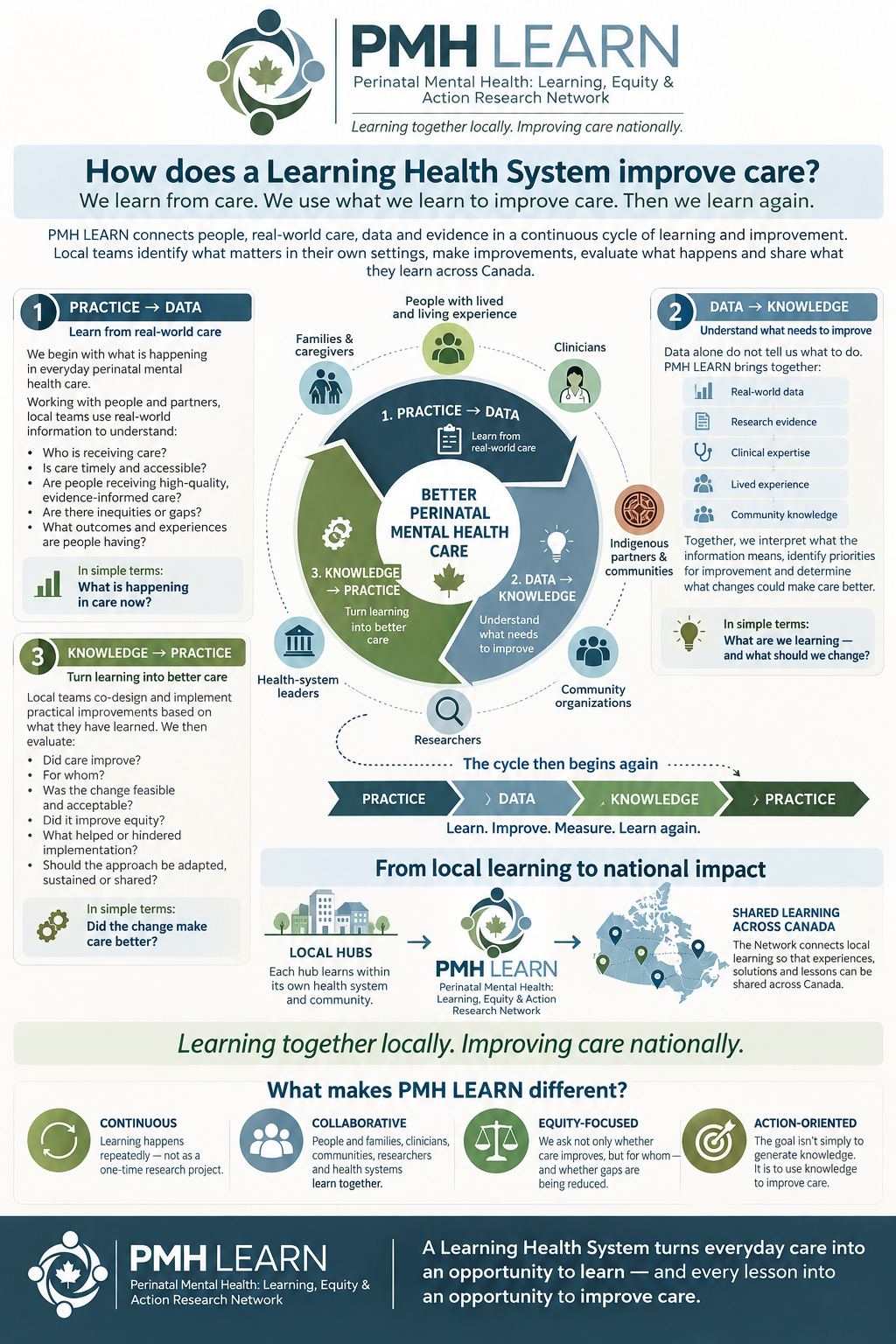
We learn from care. We use what we learn to improve care. Then we learn again.
PMH LEARN connects people, real-world care, data and evidence in a continuous cycle of learning and improvement. Local teams identify what matters in their own settings, make improvements, evaluate what happens and share what they learn across Canada.
We begin with what is happening in everyday perinatal mental health care.
Working with people and partners, local teams use real-world information to understand:
In simple terms: What is happening in care now?
Data alone do not tell us what to do. PMH LEARN brings together:
Together, we interpret what the information means, identify priorities for improvement and determine what changes could make care better.
In simple terms: What are we learning — and what should we change?
Local teams co-design and implement practical improvements based on what they have learned. We then evaluate:
In simple terms: Did the change make care better?
At the centre of the cycle: Better perinatal mental health care.
The cycle then begins again: Practice → Data → Knowledge → Practice.
Learn. Improve. Measure. Learn again.
Learning together locally. Improving care nationally.
A Learning Health System turns everyday care into an opportunity to learn — and every lesson into an opportunity to improve care.
A downloadable two-page overview of the Network, its purpose, hubs and approach.

CIHR announces the results of the Team Grant: Pan Canadian Network: Emerging Learning Health System in Perinatal Mental Health on November 25, 2026 in Ottawa.